

The fingerprint of climate change can be found in our “crazy” weather. Record warm ocean temperatures created abundant humidity, long-term droughts powered wildfires, and a warming atmosphere brought us hotter days. Climate change felt inescapable this summer. As we scrambled to salvage our homes from flooding or pushed through smoky air to work outdoors, it was easy to overlook the impact the weather was having on our own personal health. Burning eyes, shortness of breath, asthma attacks, mold allergies, and anxiety were common symptoms around Milwaukee this summer, thanks to climate change.
With recent events, this article seemed fitting to resurrect from our fall of 2025 wehr words article. Read the rest of the 2025 fall newsletter here.
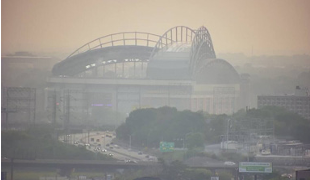
Climate Change Is A Health Hazard
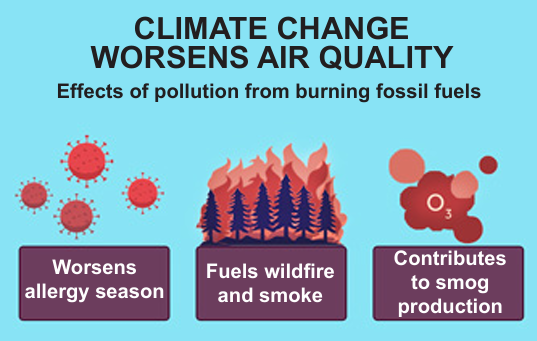
Climate change not only stresses natural systems, it stresses human health. Heat waves can cause heat strokes and trigger heart attacks. Flooding from extreme rain often leads to outbreaks of toxic mold, disease-carrying mosquitoes, and water-borne illnesses. Wildfire smoke and air pollution from burning fossil fuels have detrimental health effects. Climate change is “the single biggest health threat facing humanity,” according to the World Health Organization. Watch the video below from the American Lung Association (ALA) for an overview of how a changing climate influences your health.
Smoke Gets In Your Eyes (and lungs, and heart, and pancreas)
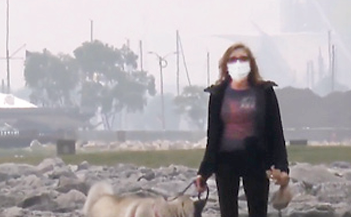
The wildfire smoke that caused Milwaukee’s record number of Air Quality Index(AQI) days this summer was a toxic mixture of gaseous air pollutants and very small particles.
As this ALA video explains, the tiny
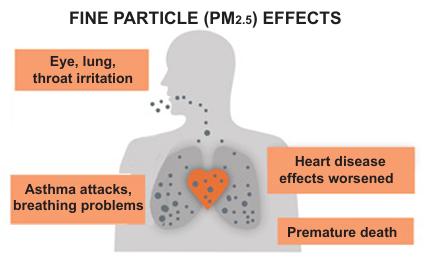
particles in the smoke pose the greatest danger because they are absorbed into the bloodstream through the lungs. Smoke can increase the risk for asthma, lung cancer,
and other chronic lung problems, increase heart attacks, and is associated with preterm birth and miscarriage. Wildfire smoke impacts everyone’s health, but it is most damaging to children, pregnant women, seniors, and people with pre-existing conditions such as asthma, COPD, heart disease, and diabetes. A recently published study in the journal. Nature found that, on average, wildfire smoke causes more than 41,400 excess deaths in the U.S. each year. Here in Wisconsin,
that means hundreds of premature deaths caused by a smoky summer. Read this report from FOX6 on how wildfire smoke is impacting Wisconsin and what you can do to protect yourself and your family during air quality events. As this ALA video explains, the tiny particles in the smoke pose the greatest danger because they are absorbed into the bloodstream through the lungs.
Smoke can increase the risk for asthma, lung cancer, and other chronic lung problems, increase heart attacks, and is associated with preterm birth and miscarriage. Wildfire smoke impacts everyone’s health, but it is most damaging to children, pregnant women, seniors, and people with pre-existing conditions such as asthma, COPD, heart disease, and diabetes. A recently published study in the journal Nature found that, on average, wildfire smoke causes more than 41,400 excess deaths in the U.S. each year. Here in Wisconsin, that means hundreds of premature deaths caused by a smoky summer. Read this report from FOX6 on how wildfire smoke is impacting Wisconsin and what you can do to protect yourself and your family during air quality events.
Smog is still a thing
Smoke from wildfires is a growing source of air pollution due to climate change, but smog remains a global problem. When we burn coal, natural gas, and petroleum (heating oil, gasoline), toxic pollutants like sulfur dioxide, mercury, and fine particulates are released into the air, along with climate-changing CO2. These pollutants cause smog that acts just like wildfire smoke in our bodies, traveling from our lungs to every part of our bodies. Health impacts from air pollution are well-documented and include lung diseases such as asthma and COPD, heart disease, high blood pressure, stroke, cancer, and even worsening diabetes. Poor air quality has a disproportionate impact on seniors and children and is linked to increased risk for dementia and Alzheimer’s in adults, and cognitive function in children. Particulate pollution can even cross the placenta and impact babies before they are born! The good news is there is less smog in Wisconsin now than even 30 years ago, thanks to regulations that control emissions from factories, power plants, and our cars and trucks. According to the U.S. Environmental Protection Agency, from 1970 to 2020, the Clean Air Act prevented more than 435,000 premature deaths and prevented millions of cases of disease. Explore more about air pollution in this National Geographic video.
Why is the climate changing?
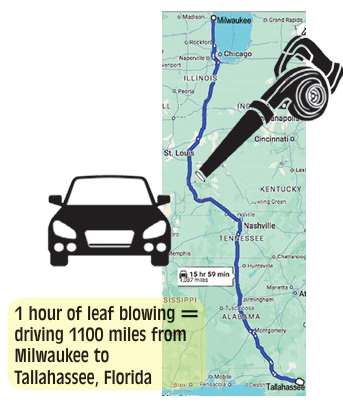
When we burn fossil fuels, such as oil, gasoline, coal, and natural gas, we release large amounts of CO2 into the atmosphere. This rampant CO2 accumulates in the upper atmosphere, acting like a thick, heat-trapping blanket that superheats our atmosphere. This extra heat makes temperatures rise and disrupts our global weather system. Learn more at What You Need to Know About Climate Science
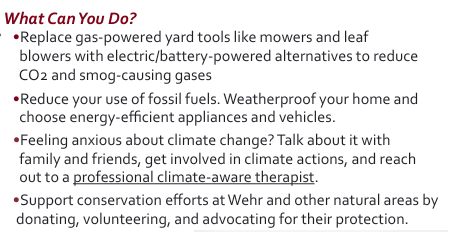
- Beveryly Bryant, fall 2025
RECENT ARTICLES

Words from our Wehr Community - Former Staff

Words from our Wehr Community - Former Volunteers

Words from our Wehr Community - Visitors