Phenology at Wehr | 2026 year-end report
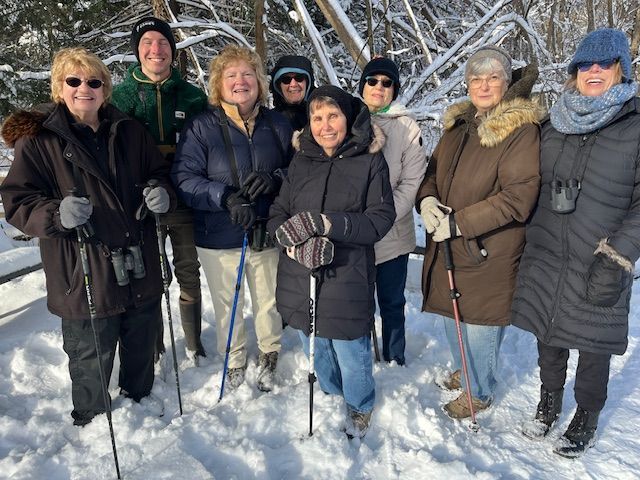
Phenology Volunteers braving the cold
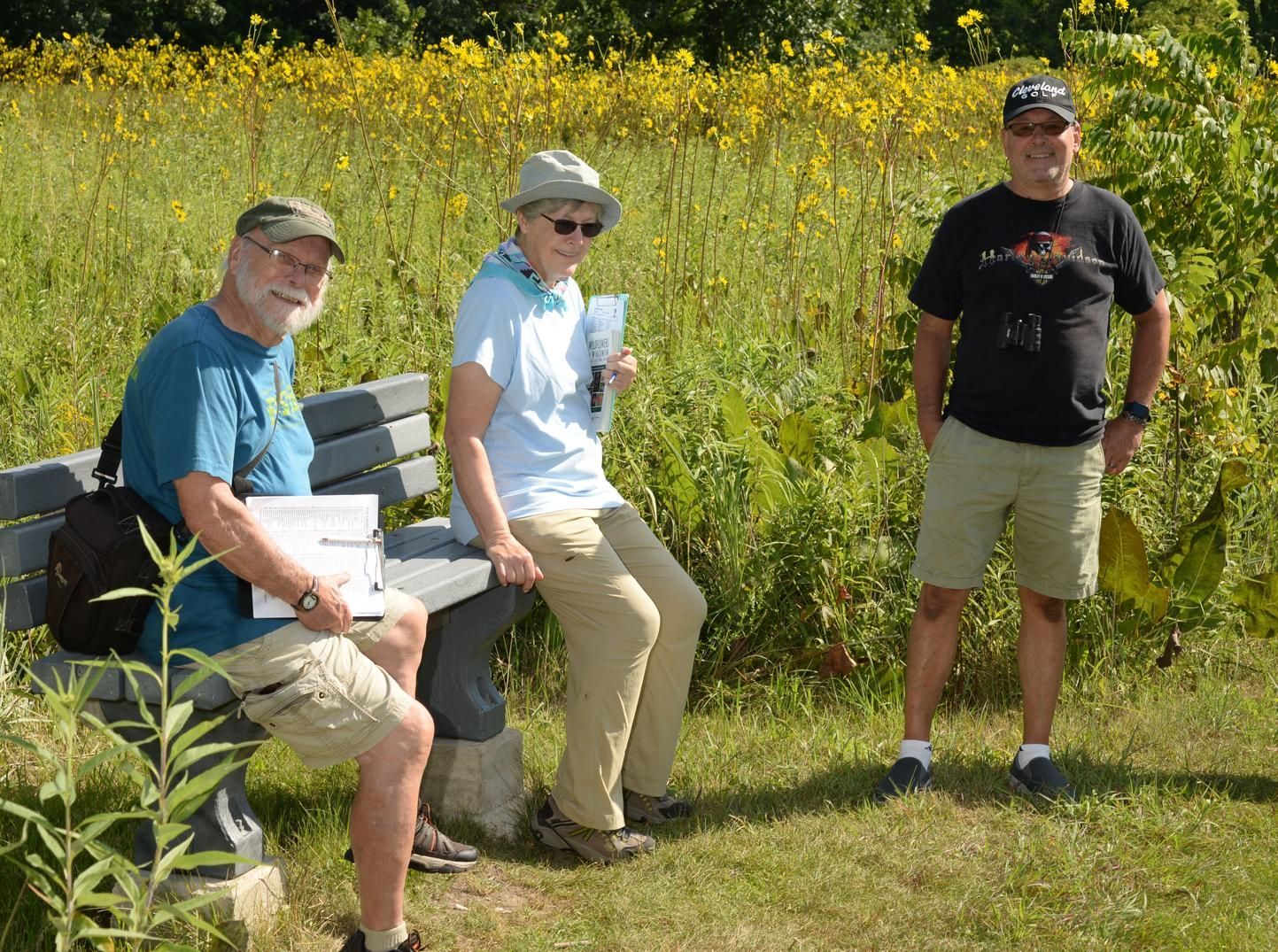
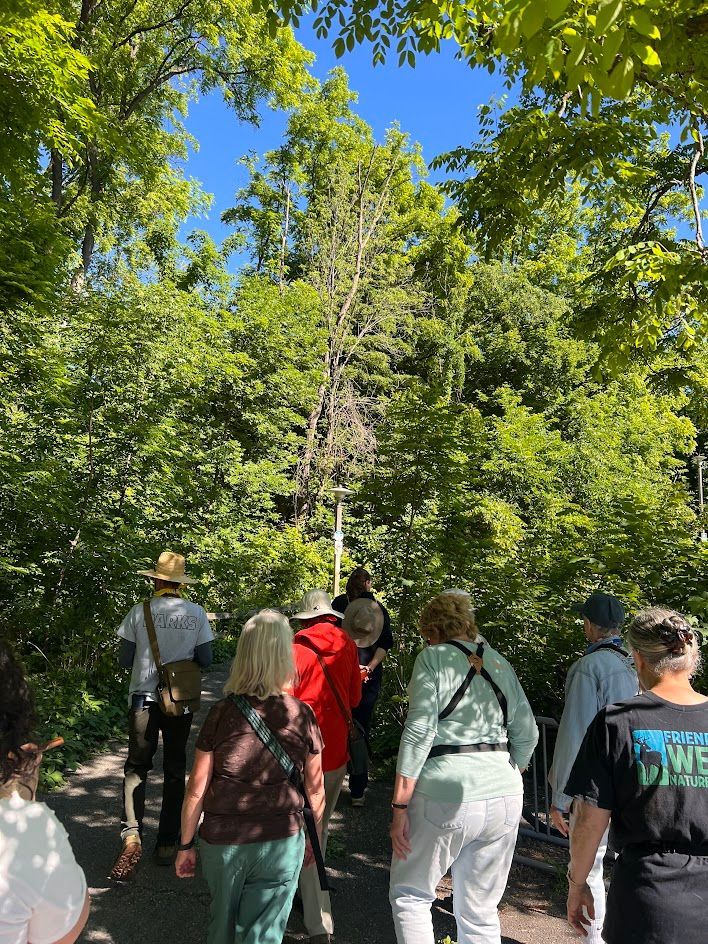
Phenology is the scientific observation of change in biological life cycles that are influenced by seasonal and climatic variations. Traditionally, phenology observations of flora is looking at an individual specimen or plant over the course of time to observe how that individual adapts with seasonal and climatic variation. By looking at a single individual, you can observe how droughts, extreme weather, and other weather changes impact the growth, blooms, and fruit production year-to-year.
However, here at Wehr Nature Center, we are observing changes to landscapes and only observing when blooms are present. Though this doesn’t give us specific information on growth, seed production or changes in distribution, it does give us data on how long blooms are present and how it changes over time. Not for an individual, but an entire population. This group is led by Jeff Veglahn, Land Manager, but contributions come from the entire group (roughly 15 regular volunteers). Though many of the volunteers don’t have a background in biology or botany, they all share a passion for the outdoors and are very knowledgeable about native plant identification. It is truly a pleasure to spend Monday mornings with this group to observe and learn together, not to mention extraordinary conversation.
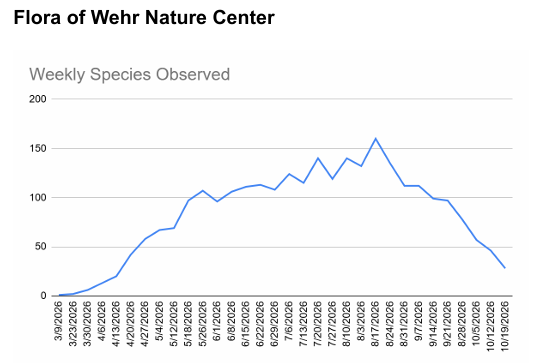
In 2026, the phenology group had 32 weeks of observations starting on March 9 and ending October 19. We define the start and end of our observations when skunk cabbage (Symplocarpus foetidus) starts blooming in the spring and when American Witch-hazel (Hamamelis virginiana) starts blooming in the fall. Because witch-hazel is the last vascular plant to bloom in Southeastern Wisconsin, and oftentimes blooming into winter, we mark the end of our phenology season at the start of its bloom. And, though a number of species are still blooming after witch-hazel’s blooms open, many are hard to identify due to other characteristics of the plant drying up and becoming unrecognizable.
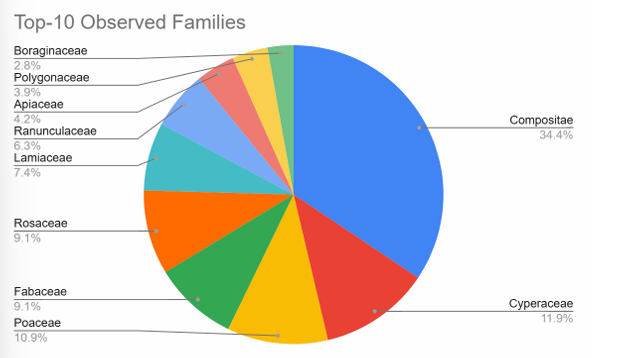
Over the 32 weeks, the group collectively observed 599 species and registered a whopping 2,713 individual observations for the season. This is an increase of 30 observed species and 606 individual observations since 2021. An observation is an individual bloom of a species week-to-week. Our weekly observations range from one species (March 9) to 160 species (August 17). There were 492 observed native species (82%) and 107 non-native species (18%). Of the 107 non-native species observed, only 40 (7%) are on Wisconsin DNR’s NR-40 list and actively managed to ensure these populations are reduced over time. The 599 observed species represented 87 taxonomic families. The largest 10 observed families were Compositae (98 species, 19.9%), Cyperaceae (32, 6.9%), Poaceae (31, 6.3%), Fabaceae (26, 5.3%), Rosaceae (26, 5.3%), Lamiaceae (21, 4.3%), Ranunculaceae (18, 3.7%), Apiaceae (12, 2.4%), Polygonaceae (11, 2.2%), and Boraginaceae (8, 1.6%). There were 54 families observed that had either 1, 2, or 3 species represented.
Quality Assessment
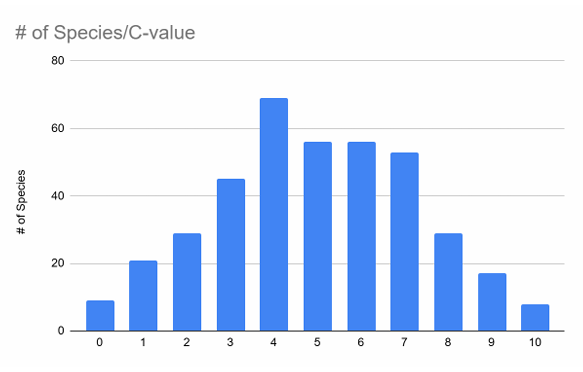
Floristic quality is determined based on the average Coefficient of Conservatism (C-value) for an area. The C-value is an index, assigned to species, that shows the likelihood of an individual species being found in a particular undisturbed habitat. The index is a 0-10 numerical score. A C-value of 1 indicates that a plant requires no specific habitat and will be found in many conditions, especially disturbed sites, and can be “weedy” in nature. A C-value of 10 indicates that a plant requires very specific growing conditions, including soil, pH, moisture, sun conditions, and is very likely to be found in its specific habitat. Examples for each would be Solidago canadensis (Canada Goldenrod) which has a C-value of 1. Canada goldenrod grows in many different habitats including prairies, woods, dry sites, wet sites, and disturbed sites like roadsides. Hydrastis canadensis (Goldenseal), on the other hand, has a C-value of 10 and is found strictly in mesic, wet-mesic forests with rich soil and little to no invasive competition. All non-native plants have a C-value of 0.
The Floristic Quality Index (FQI) is a weighted calculator that allows for more accurate comparison from location to location. This value is calculated by adding the C-value and dividing it by the total number of species. Traditionally, only the native species values are taken into consideration. A site is considered high quality if the FQI is 50 or greater. The FQI for Wehr Nature center is 97, indicative of remnant and long-term successful habitat restoration. The overall C-value for Wehr Nature Center is 3.8. Areas with a C-value of 3.5 or greater are considered valuable and stable natural habitat. This number is skewed slightly, as species of southern range and not historically found in Wisconsin are considered “non-native” and have C-values of 0 and categorized the same as non-native and invasive species. If we remove these southern species from the equation, the overall C-value increases to 3.9.
RECENT ARTICLES